Thursday, 29 December 2011

MIS EN SCENE- Casino Royale

In lesson we had to answer the following question as an assigment in order to show our understanding of exactly what mis en scene was and how its been used in a real life piece (Film)

How does the director use Mis En Scene in the opening of casino royale to identify the characteristics of bond?

 Firstly, i tried to analyse the body language and facial expressions of the characters in the sequence and what the directors intentions are in terms of what he/she is trying to get the audience to think about and the mood he/ she is trying to put the audience into.

 The man in the lift looking everywhere-  makes him look like his suspicious of something

He is walking fast- The audience might think that he is in a hurry to carry out a task

When the man got into the office- he stood still and did not blink and this might represent SHOCK!

Both the man and bond are looking on one side in a particular shot in the sequence- This might represent determination.

When the man sits down casually-  Shows that he is relaxed and is not scared of Bond.
  

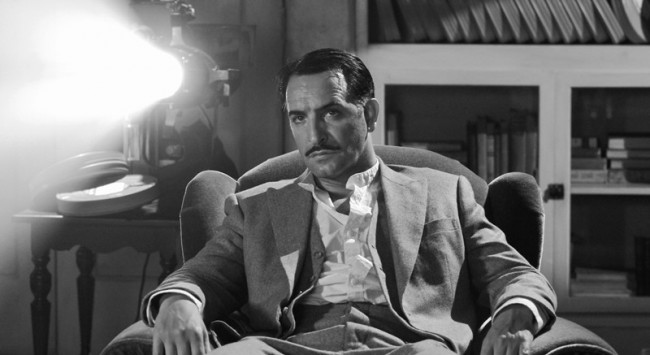
Summarising the Opening sequence of Casino Royale; The director uses two sequences to show us the characters of Bond. Casino Royale is based in two different settings one in which is based in aoffice while the other is set in the toilet. Low- key lightning is was used in the office to create very deep shadows making the background dark in general.
                    The scene of Casino Royale opens ina fade in of an establishing shot which then shows their location. The scene is shot in black and white and this might have been purposelu put into the sequence in order to suggest/demonstrate a change in time which could be either in the future or the past. The movement with the first shot is smoke coming out of a car then a black car pulls up outside the building and then a very low angled shot of someone getting out of the car is used in order to present the character hs having a high status and belonging to a particular class. The man looks michievious as though they have a secret.The director uses another low angled shot to show the elevator going up. They show the floors changing on a little screen inside the elevator  and personally, i believe this could be interpreted as a countdown.

But the Big question is..........a countdown to what?

As the man gets out of the lift, we see him speedily walking away and this may suggest that he is in a hurry to crry out a task or have an important discussion with the main character James Bond. A medium long shot is used for this and the camera slowly pans left and zooms in. They also use a low angle shot to hiw the door of the office opening. The room is quite dark which might be showing a hidden agenda maybe. There is a quiet noise which does not , match the man's movement, which is known as a contrapuntal sound, and then they quickly cut to a close up shot of his face in order to show the udience his reaction and emotion at that time. His face is well lit on one side and not very on the other side, which suggests that the man might not be completely truthful. On the other hand, the fact that the director has purposely made thesame side of their faces dark while the other sides of them light might possibly be to symbolise the fact that the dark sides of both of them represents anger and determination while their bright side shows more of them negotiating and having a proper discussion.
                                    We hear speaking and the man quikly turns around and the camera pans left.We see Bond sat down and he's barely lit. They use a high angle shot and james Bond is positioned near the bottom of the screen showing he may be venerable at this moment in time. The man moves across the room and sits down, slightly and slowly opening a draw containing a gun. They use as medium long shot which we can only see James Bond in as he is barely lit. The man asks." You arent a cricket fan by a chance are you?" and the scene changes to a cricket match. Its still black and white , showing a change in time. Writing fades in at the bottom saying, " LAHORE, PAKISTAN". You can see a normal atmosphere, people are playing cricket while others are watching. The cricket players are wearing white maybe showing their innocence while James Bond on the other hand is wearing dark clothes. Then we see a shiftly looking audience member who keeps looking around to see who's watching. When he notices James Bond who is once again, barely lit, the man quickly makes a move like hes got something to hide and as a result of this reaction, James Bond follows quickly. The music cuts in and is fast paced. A hand held camera shot is used at this moment in time in order to demonstrate and show the anticipation as well as how the tension begins to build up. There is a cut shot and we see the man frantically running up the stairs when James Bond slowly walks into the room. A hand-held camera is used again . We see the man run into the toilets and pull out a gun , when James comes into the room. The music gets faster  and the cut shots are getting faster. They begin to fight. The director decide to use a medium long shot and close up shots for the scene in other for the audience to be able to see whats happening and the expressions of the characters.
          
       The colour begins to turn sepia colour and we hear the mystery man hit James Bond witha bin, and when the scene changes back to the office and we can see the man pull out a gun and point it at James Bond. Although we can not see James because we know its him as they have use thesame angle previously. The music slows down a lot in order to build up tension. They use a close up of the mans face and we see him slowly smile and speak. He pulls the gun and nothing happens . Theres a cut shot to james who slowly lifts his hand as he holds the gun.
Finally, the directo uses a cut shot and we hear the man crashing against something and it breaks. Theuy use a low angle shot and the man finds himself in a venerable position. They use a close up of James Bond face to show his anger. We see the man who we thought was dead reach for the gun and the a reverse shot is used to show james who quickly turns around and then it turns into the opening titles.


Monday, 12 December 2011

Cliff Hangers

  •  This is Sometimes used but not always
  • It often features a main character in a precacious or difficult dilemma , or confronted with a shocking revelation
  • This can entice the audience to keep watchiing in order to see how revelation resolves itself
Film- ' The italian Job'.

Red Herrings

  • A Red Herring is the name given to a device which intends to divert the audience from the truth or an item of significance.
  • Can work with other devices (enigmas) to create suspence.
A classic example of a Red Herring is the Crop Duster scene from the film ' North by North west' ( Hithcock 1958)

Clip-

The main character Thornhill gets sent to go and meet a man (Kaplan) who will explain why he has been mistaken for a government agent and we believe, help him.

Friday, 9 December 2011

MIS EN SCENE- Continuation

Today, we started off by recaping and discussing what we have learnt about Mis en scene so far . Then , the rest of the ,lesson was based on 'Why facial expressions are important on screeen', and then we looked and noted down a few examples of facial expressions and what they might possibly mean.
   
           - If there are no face expressions, the audience might misunderstand the character however, with facial expressions, you can guess what the character is saying without the dialogue.

Examples
  • Frightened- Looking Down, sweaty hands,shaky   
  • Angry- Twitching, screwface
  • Embarrrased- Hands over face, looking away, red face
  • Relaxed- Straining into space,feet up.


Thursday, 8 December 2011

MIS EN SCENE

In lesson today, we learnt about Mis en scene which is a french term thats used to describe what is put into the scene or frame. We was Thought that what is put into a film or even taken out of a film will reflect on the views of the audience in the sense that, they will be able to have an idea of the genre of the film as well as what the film is going to be about, what the characters are thinking and also, the characteristics of each character.
In addition to this, Mise en scene also determines how the audience are supposed to feel at a certain point of a film.
There are certain elements to consider in mis en scene and they are as follows;


  • Settings and Props-  For instance, a sci fi film might include objects such as Spaceships, Alien planets, lazer, gadget, fake alien, lab, gadget, space suits etc. While on the other hand, an action/ thriller film might include helicopters, guns, explosives, cars, and cities.

  • Costume, Hair& Make-Up- Costume in mis en scene is like an instant indicator to the audience, of the characters social status, job, or even personality while on the other hand, Make up is used on the characters in order to show their facial features.
  • In a Western film, the following costume features are like to be used; Cow-boy hats, Holsters, Jacket with fringes, Boots, Bandana, Waistcoats, Checked shirts etc. However in a Musical, Characters are more likely to be dressed in colourful dresses, Big Dresses/ corsetts, and generally a coloured theme.
In addition to this, Villians in film would usually be dressed in dark cloths while on the other hands, heros are most likely to be viewed in lighter coloured clothes and capes.
The Clip above ' Savage Land'  is a Western film and it basically illustrates how the costume aspect of mis en scene has been used.

In contrast, a musical looks more like this;
The characters in this musical generally in bright clothings such as; Red, Blue etc....

Furthermore, other aspects of Mis en Scene also includes facial expressions& Body language of characters, lighting& colour and also, Position of the characters and objects within a frame.

 All these facial expressions and body language from the different films made at different times have been deliberately placed in individual scenes to meet different purposes and make audiences feel a specific emotion.

Enigmas

  • This refers to a puzzle, something mysterious or inexplicable or a riddle or a difficult problem
  • In thrillers this is commonly something which the protagonist has to try to find out or solve before the narrative is resolved and the film finishes.
The following films include Enigmas;

Wednesday, 7 December 2011

Production Meeting 1

We started our first production meeting today. We had to create a spider diagram that included the diferent ideas each group had of our thriller may or should consist of. Unfortunately, one of our team members was absent and so therefore as a result of this, we had to carry on with the task without him.

The following task was given to us by our teacher.
  • Task 1- Create a spider diagram ( On paper or in Word) of potential thriller ideas
Image-

  • Task2- Take one idea and develop it through a second spider diagram. Consider the locationss, props, camera work, cast, etc
  • Task3- Write a proposal outlining your ideas for the thriller opening and the locations/props etc.that you require
  • Task 4- Storyboard it
Image-

The ' Psychological' Thriller- The mind, conflict, and the past

The suspence created by pshychological thrillers often comes from two or more characters preying upon one others needs. either by playing deceptive games with each other or by merely trying to demolish the others mental state. Sometimes the suspence comes from within one solitary character where characters must resolve conflicts with their own minds. Usually, this conflict is an effeort to understand something that has hapened to them.

Narrative- Structure, Formulas and Devices

For example;
  • Automatic use of ' Continuity editing'
  • The clear establishment of ' cause and effect' plotting which establishes character motivations and helps tell an interesting story which procides logically and steadily   

Monday, 5 December 2011

Continuation of Rope in terms of "Suspense"

Rope (1948)_


_ The suspense is created through the body in the chest/ box
_ What will happen?
_ Will the body (and the two men) be discovered and brought to justice?
_ Do we, the audience, even want this to happen?.

Monday, 28 November 2011

Aspects of the thriller- Alfred Hitchcocks Biography..


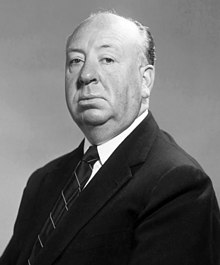
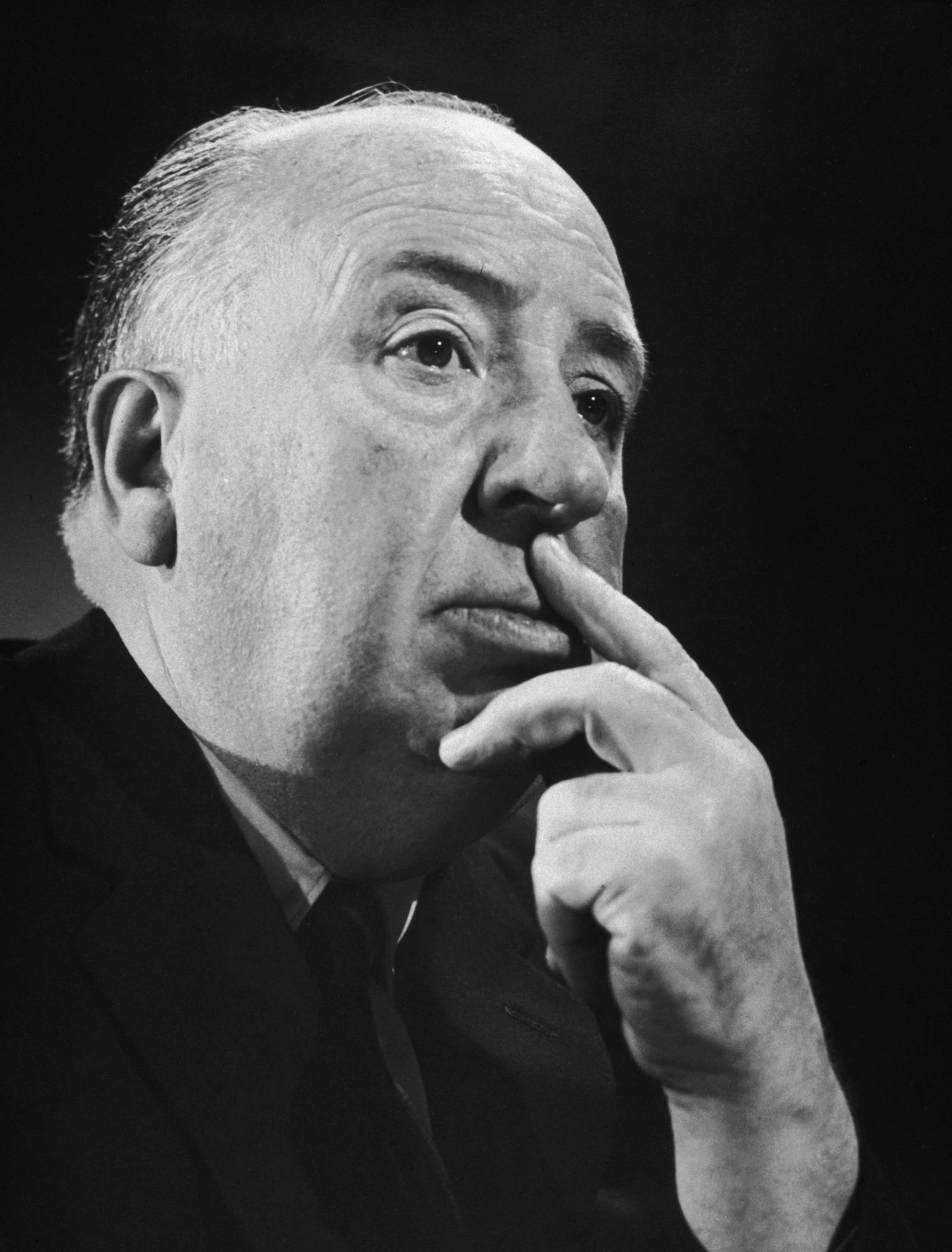
Alfred Hitchcock is known to be one of the most famous film directors of all time and he himself was as mysterious as the plots of his movies. Hitchcock was born to a catolic family in the year 1899. He endured many narrowing experiences throughout his lifetime that may have helped to fuel his fascination with the macabre. His father died when Hithcock was just forteen years of age and as he result of this terrible event, Alfred Hitchcock had to quit school but however, continued to study and read on his own. He took evening classes, attended theatre and cinema perfomances regularly, and he got his feet wet in the talent pool of art and writing. In 1920, Hithchcock became aware of an American film company called Famous players- Lasky that was opening a studio in london.  He was offered a position as a title designer, which he accepted and developed a love for the art of filmaking from there.

Friday, 25 November 2011

Thrillers

The 'Rules'
  • The Road runner cannot harm the cayobe by saying ' Meep Meep'
  • That is one example of a 'Rule' for a genre

Do films follow 'Rules'?
  • Some film makers will claim that 'there are no rules' or that ' rules are there to be broken'
  • However, most would agree that there are certain conventions that mainstream films observe in order for them to be acceptable to the mass audience
Thriller 'Features'
  • Usually in big cities , like in the ' Bourne series
  • Usually follows a Hitman, type character
  • Sneaky sections where the main character is trying to avoid people
  • ' Evil' characters that the main character is trying to kill or catch
  • Fast, ' Jumpy' edits to show tension and action
  • Sometimes a sneaky woman who betrays the main character is involved
  • Darker areas are used in filming to show a shadowy, sneaky look
  • Always a fight scene
  • Always a chase
  • Cliffhangers
  • Prolongonist and antagonist
  • Death
  • A problem that needs to be solved ( Enigmas)
  • A kidnapping
  • ' Walking away shot', slow motion shot  as they walk away from an explosion, without clinching
  • Mind games
  • Plot 'twists'
  • Dramatic music'
  • Always a trade between two parties
  • Ticking lock
Possible films
  • Disturbia 
  • Burried
  • Panic room
  • Phone booth
  • Hostage                                     
  • Kill bill
  • Vantage point
  • Fatal attraction
  • 12 rounds
  • No country for old men
  • The strangers
  • Taken
  • Law abiding citizen              

Thursday, 24 November 2011

Camera Movement

 The camera always moves from a fixed position.

  • Pan-The camera rotates from right to left
  • Tilt- The camera tilts up and down
  • Dutch tilt- The camera tilts on an angle to give a disorientating effect.
Zoom- The camera remains still but the focus is adjusted to move either forwards or away from the objects.
Reverse zoom/Contra Zoom- When the focus zooms in whilst the camera moves out. (Not a movement from a fixed position)
    The camera is free to move around the set/ location
  • Track- The camera moves fluildly on a set of tracks in a certain direction
  • Dolly- The camera is on wheels so can be moved in any direction
  • Crane- The camera is placed on a large crane arm that enables it to move around the set with ease. It allows the camera to move quickly between different heights
  • Rolling-n The camera moves diagonally making the image  askew( often used to suggest that a character is ill or drugged)
  • Handheld- The camera is held in a hand and can therefore move around in any direction. The result is usually a shaky picture
  • Steadicam-  The camera is worn on a weighted harness to keep it still and balanced, whilst allowing the freedom of handheld filming


Thursday, 13 October 2011

CINEMATOGRAPHY

Cinematography means the use of camera. In Lesson, we learnt the different types of shots that might be used in a scene to tell us something about the character.


  • Close-up shot- Focuses between the face and neck of the character
  • Extreme Close-up - A small section of an object or character
  • Mid shot- Head Down (or waist to feet)
  • Long shot- Whole body is visible     

Extreme long shot (wide shot)

  • Shows a Vast area
  • Sometimes called an establishing shot
Low Angle
  • Looking up at the actor
  • Puts the character in a position of power, makes the viewer feel interior
An example of a High Angle shot
High Angle
  • Looking down at actors                                                 
  • Interiority
Over the shoulder shot
  • Looks over the shoulder of a character
Point of view shot(POV)
  • Allows us to see through the eyes of the character


Friday, 7 October 2011

Film language-sound

Today i learnt the fact that sound can be categorised into diferent types, such as the following;

On screen sound- This is when you can see the source in which the sound is coming out of.
Off screen sound- This is when we can hear the sound but cant see where its coming from.

Diegetic sound- Is a sound which is part of the film world we are watching e.g, Kettle whistling
Non Diegetic sound- Is a sound which we do not recognise as part of the film world such as; a voice over or background music.

Sound Bridges- This is when a piece of music whether its diegetic or not continues smoothly within one shot to the next.

Parallel and Contrapuntal Sound- Parallel sound is a sound that suits its image while on the other hand, Contrapuntal sounds deliberately contrasts its image.

After all these had been explained, we then had to use our own initiative and think of other examples for each of the sound types.

Friday, 30 September 2011

Welcome To My Media Blog

Welcome to my As Media Studies Blog. This blog will chart my progress of my foundation Portfolio, on it i will include details of all the things have done to help me with my wonderful piece of coursework

Sunday, 18 September 2011

Film language- lightning

So far i have learnt a few things about lightining and this includes the follows;

Low key lightning- this is when the key light and back light are used in order to make a contrast between both lights, allowing the shadows to stand out more

High key lightning- More filler lights are used which makes the image look more normal, natural, and realistic

Saturday, 17 September 2011

As Coursework- The production Brief

In lesson, we were taken and talked through our production brief and what we are going to be doing for our As Coursework in a few months time, which is making our Thriller.

The Production Brief     
  • You are going to produce the opening sequence of a thriller
  • The film must be about 2minutes in lenghth
  • Work in groups of between 2 and 4 people
  • You may use people who are not in your group to help out with the acting in your sequence if you wish
After the production brief was exclaimed, we then moved unto a class discussion about different thriller ideas as well as how we are going to start our preleminary task the next lesson....

Friday, 16 September 2011

Title Sequences

In lesson today we looked at title sequences and we had to make brief bullet points on how they were created and what we could see

 Film-In The cut

  • Creepy sounding music, becomes more sinister
  • Grity looking
  • Dirty looking 
  • Small sharp words
  • creepy shots
  • Title comes up like blood from the cube ice
Film- SE7EN
  • Dark and pale loooking
  • Titles crack and flicker
  • Dirty sounding music
  • Grim scenes, disturbing
Film- Panic room
  • Starts off with the setting
  • 30 titles
  • Deep sounds for the music
  • Soon turns quick, like a clock
  • Then quickly goes with the film
  • Sound bridge